Two mounting drawings are needed to make one defensible LED wall decision: ground-supported and rigged. Without both, a project manager may protect the booth design while exposing the build programme, or save installation time by surrendering valuable floor space.
Which exhibition LED wall keeps a Dubai booth on schedule?
Ground support usually carries less schedule risk when drawings are late and the booth can absorb the structure. Rigging can win when approvals start early and clear floor space or overhead visibility has greater commercial value.
| Decision factor | Ground-supported wall | Rigged wall |
|---|---|---|
| Schedule risk | Lower when the approved stand structure can accommodate the screen | Lower only when rigging approval and point allocation are secured early |
| Floor-space loss | Base frames, ballast and rear access consume space | Suspension keeps more floor area available |
| Visibility | Effective for nearby aisle traffic | Can improve long-range visibility, subject to height and branding limits |
| Approval workload | Requires stability, floor-loading, access and power checks | Adds a rigging plot, suspended-load review and venue-controlled installation |
| Cost predictability | Usually easier to define after the support footprint is fixed | Depends on points, hoists, labour, engineering and access arrangements |
Ground-supported LED walls reduce approval dependencies when floor space is available
A ground-supported exhibition LED wall in Dubai protects the programme only when its drawing shows the complete support system. The AV supplier should identify the assembly sequence, crew, plant, ballast, rear service access and exclusion zones. The stand builder must confirm scenic masking, structural sign-off and whether floor fixings are permitted.
Accessibility must follow the applicable UAE, venue and event requirements. As a spatial reference rather than a Dubai rule, the 2010 ADA Standards for Accessible Design specify a 30 by 48 inch clear floor or ground space for wheelchair positioning and place accessible dining and work surfaces between 28 and 34 inches above the finished floor or ground. Those US dimensions do not replace local approval, but they illustrate why hidden ballast and support feet must not consume circulation or working space.
Rigged LED walls protect usable floor area when approvals are secured early
A suspended wall earns its coordination burden when open hospitality space, cleaner architecture or visibility above neighbouring stands matters. The rigging plot must identify venue points, bridles, hoists, truss, cable routes and total imposed load.
The final choice must match the screen dimensions, weight, stand height, aisle exposure and build-window length to the named venue and event manual. Confirm submission, contractor access, power activation, stand completion and inspection dates rather than assuming the previous edition’s calendar applies.
What approvals does an exhibition LED wall require at DWTC and another UAE venue?
An exhibition LED wall requires more than an AV order when its support affects structure, rigging, power or emergency access. At Dubai World Trade Centre and a comparison venue such as ADNEC Centre Abu Dhabi, the approval path must identify the drawing owner, engineering evidence, installation contractor and current deadline.
A rigged LED wall adds a venue-controlled approval and installation path
A suspended screen introduces point allocation, overhead work and access dependencies that the AV supplier cannot approve alone. Use this owner-and-document checklist before releasing the LED wall rental order:
- Exhibitor and project manager: Obtain the current organizer manual, venue technical regulations and hall-specific instructions. Confirm whether requirements change with stand type, structure height, suspended weight or event schedule.
- Stand builder: Issue the coordinated stand drawing showing the screen position, stand boundaries, neighbouring structures and conflicts with lighting, fascia or ceiling features.
- AV supplier: Provide the rigging plot, complete suspended weight, point loads, equipment data, cable route, installation sequence and inspection plan.
- Structural engineer: Check the supporting truss and suspended assembly, then supply calculations and credentials in the format requested by the organizer or venue.
- Organizer and venue technical team: Review the submission, confirm point availability and state whether an appointed rigging provider must undertake the overhead work.
- Rigging provider: Book the access slot, install the approved system and manage changes affecting points, hoists or loads.
DWTC and ADNEC documentation can vary by event and hall. Request the current form names, submission channel, publication date and deadline rather than copying details from an earlier show.
A ground-supported LED wall still requires structural, access and power checks
Ground support removes the overhead point-allocation stage, but it does not make the screen approval-free. The technical submission should cover:
What approvals does an exhibition LED wall require at DWTC and another UAE venue shown with practical context cues.
- overall height, base dimensions, ballast, bracing and anti-tip measures;
- cabinet, frame and ballast weights, with hall-specific floor-loading confirmation;
- rear service clearance, processor location and a cable route that does not obstruct emergency access;
- power demand and connection responsibility;
- scenic masking, fire-performance information and any proposed floor fixing; and
- the inspection or engineering certification triggered by the current event rules.
Once both approval paths are visible, the commercial comparison can begin. The useful quotation is the one that includes every engineering, labour, power, rigging and access charge.
What is the like-for-like total cost of ground-supported and rigged LED wall rental in Dubai?
The cheaper exhibition LED wall cannot be identified from a screen-square-metre rate alone. A valid Dubai comparison holds the screen dimensions, pixel pitch, brightness class, processor, content inputs, rental dates and operating hours constant, then separates equipment, structure, venue services, power, plant, transport, approvals and overtime.
Issue one fixed brief stating the event, venue, hall, booth dimensions, screen size, mounting height, indoor operating conditions, content resolution, input sources and show schedule. Obtain itemised responses from at least two named UAE AV suppliers, each carrying a quotation date, validity period and stated exclusions. Omit any price that cannot be traced to a dated supplier quotation or published rate card.
- Common package: LED cabinets, spare modules, processor, signal distribution, playback, cabling, technicians, transport, installation, testing, show support and dismantling.
- Ground-supported additions: Frame or truss, ballast, base plates, scenic masking, engineering review, labour and lifting plant.
- Suspended additions: Rigging design, venue points, hoists, truss, safety equipment, venue-appointed labour, inspections, plant and engineering documents.
- Commercial conditions: VAT, deposits, minimum labour calls, night work, overtime, standby crews and late-order surcharges.
Ground-supported LED walls can win on cost when rigging fees exceed the value of recovered floor space
Ground support usually wins where the booth can absorb the complete rear footprint without losing a useful meeting, display or circulation zone. The project manager should measure the frame, ballast and rear service access rather than counting only the visible screen depth.
The apparent saving narrows when heavy ballast increases transport or plant requirements, scenic finishes must conceal the structure, or installation interfaces create extra labour. Ask each supplier which floor-loading assumptions, access conditions and stand-builder responsibilities could alter the quoted price.
What is the like-for-like total cost of ground-supported and rigged LED wall rental in Dubai shown as an editorial planning reference.
Rigged LED walls can justify their premium when clear floor space has commercial value
Suspension earns its premium only when the recovered area changes the stand’s function. The plan should show whether that space enables another demonstration, hospitality table, lead-capture point, storage route or cleaner visitor flow.
Compare that commercial gain with the complete rigging premium after venue services, appointed labour, hoists, inspections and engineering are included. The next decision is physical rather than financial: how each mounting method changes sightlines, usable space and engineering risk.
How do ground-supported and rigged LED walls change booth space, sightlines and engineering risk?
Ground support transfers the LED wall load to the hall floor but consumes booth depth and needs stability measures. Suspension clears that footprint but adds overhead loads and venue-controlled work. Screen height, viewing distance, neighbouring stands and emergency access determine which compromise is acceptable.
Ground-supported LED wall drawings must show the footprint behind the visible screen
A ground-supported exhibition LED wall in Dubai can look slim in a front elevation while hiding support feet, braces, ballast and cable ramps behind scenic masking. The dimensioned plan should show those elements alongside storage, electrical access, emergency routes and the boundary with neighbouring stands.
- Check the complete footprint: Mark the base, bracing, ballast, cable route and working space needed for assembly and dismantling.
- Confirm the service method: Rear-service cabinets need technician access behind the display. Front-service cabinets may reduce that clearance without removing structural depth.
- Test the stand interface: Ask the stand builder to confirm that masking, storage doors and circulation do not obstruct the support system.
- Verify hall constraints: Obtain the current rules covering floor protection, anchoring, floor loading and emergency access for the selected hall.
Rigged LED wall drawings must prove the complete suspended load and cable route
A rigging calculation based only on LED cabinet weight is incomplete. The declared suspended load should include cabinets, truss, hoists, controllers, power distribution, cabling and safety equipment, with the load assigned to each proposed point.
- Request the engineering basis: The structural review should identify applicable load cases, hoisting allowances and the limits of any generic supplier calculation.
- Draw the cable path: Show how signal and power reach the suspended system without crossing a service area or conflicting with stand construction.
- Prepare for point movement: Include a contingency drawing for shifted or unavailable rigging locations rather than redesigning after point allocation.
LED pixel pitch and viewing distance should be identical in both support comparisons
The mounting decision becomes distorted if one trade show AV rental UAE quotation quietly changes the display specification. Both options should use the same pixel pitch, cabinet type, brightness setting, refresh rate, processor, redundancy assumption and native content canvas.
- Plot the nearest expected viewer and principal aisle sightline on the stand plan.
- Attach cabinet documentation covering dimensions, weight, service method and power consumption.
- Record risks including dead pixels, cable failure, blocked service access, ballast intrusion, late point allocation and delayed dismantling.
Once these physical risks are visible, the project manager can test which installation workflow will survive the available build window.
Which installation workflow fits a compressed Dubai exhibition build window?
A compressed Dubai exhibition build favours the LED wall with the fewest unresolved dependencies at handover. Test both methods against the organizer-issued manual for the named event and edition, covering hall access, stand completion, power activation, inspection, show opening and breakdown. An isolated screen-assembly estimate is not a workable programme.
Ground-supported LED installation can proceed with the stand build only when interfaces are agreed
Ground support removes the dependency on a venue rigging slot, but it does not create an independent workstream. The stand builder must release a level working area before the AV crew assembles the frame, installs ballast or approved fixings, mounts cabinets, routes cables, tests the system and hands the structure back for scenic masking.
- Confirm access: Record the delivery route, plant, crew, clear assembly area and unloading owner.
- Release the footprint: Complete the relevant flooring and identify wall, counter or store-room interfaces.
- Build and protect: Install the support, ballast, cabinets and cabling, then assign responsibility for protecting the screen while carpentry and painting continue.
- Energize and inspect: Agree temporary power for assembly and state when the electrician will activate the final supply for processing, content tests and organizer inspection.
Ground support becomes a schedule risk when scenic work hides ballast, blocks rear service access or forces AV technicians to share a narrow work zone with carpenters. The programme should name who releases each interface rather than merely placing “LED installation” on a timeline.
Rigged LED installation depends on point availability and venue-controlled access
Suspension can clear the floor early and allow construction beneath the screen, provided the rigging plot, structural information and approved-for-construction drawing have cleared the event’s current review path. The venue or appointed rigging provider must then confirm point installation, hoists, labour, access equipment and the lifting slot.
The rigged sequence runs from point installation to truss assembly, LED attachment, controlled hoisting, cable routing, power connection, testing and scenic coordination. Crew and plant assumptions must accompany every activity. A late screen dimension or position change can affect point locations, cable drops and neighbouring stand work, so the project manager should obtain written instructions for post-approval changes.
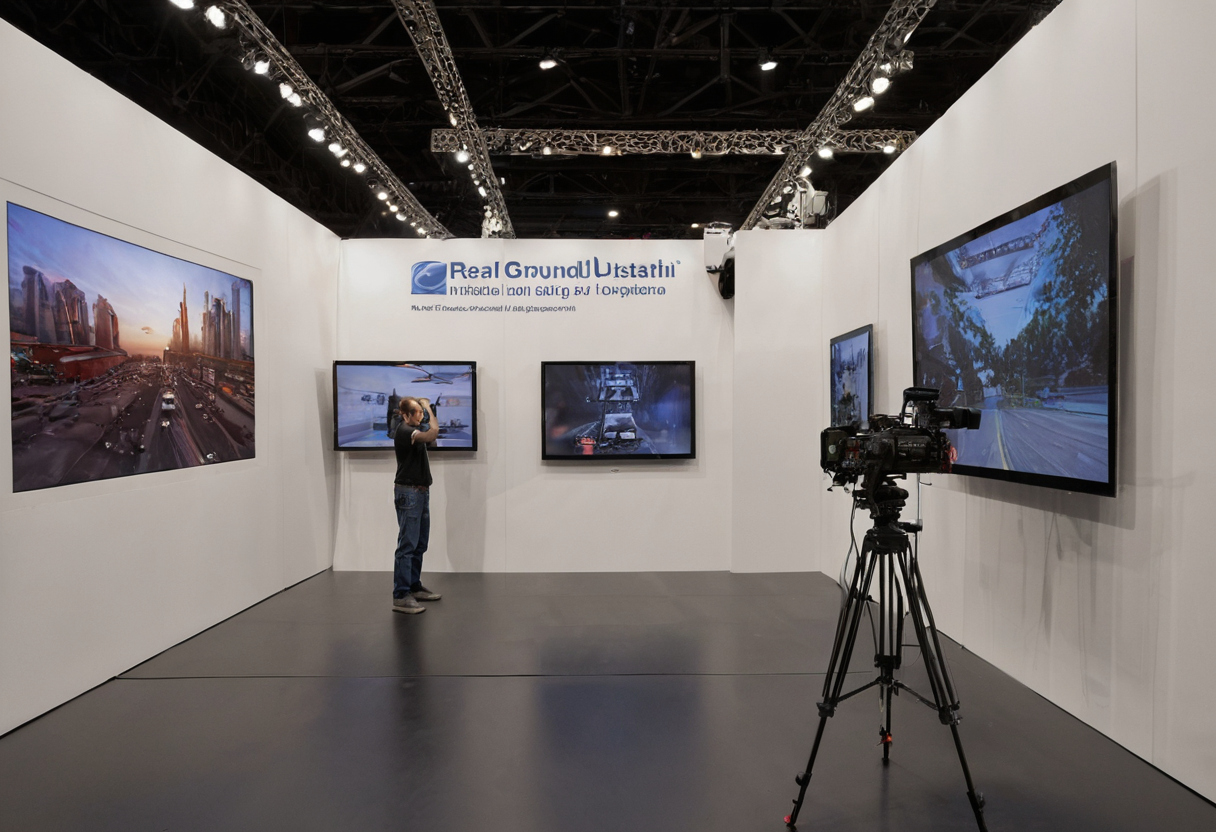
Which installation workflow fits a compressed Dubai exhibition build window shown as an editorial planning reference.
The contingency must state what happens if a hoist slot, point allocation or access window is missed. That makes the final control gate practical: two comparable drawings, complete programmes and a dated fallback point.
A two-drawing technical request lets the project manager choose the safer LED wall this week
The project manager should request two coordinated drawings and two itemised prices for the same exhibition LED wall this week. One package should use ground support and the other venue rigging. Each package must identify approvals, deadlines, dimensions, loads, floor use, crew, power, plant, exclusions and the owner of every submission and site task.
The exhibition LED wall request should force suppliers to state exclusions and assumptions
Send this request jointly to the stand builder and AV supplier:
“Please submit ground-supported and rigged alternatives using an equivalent LED display, processor, content inputs, operating schedule and service level. For each alternative, provide a dimensioned plan, elevations and sections showing the support footprint, service clearances, cable route and, where applicable, the rigging plot. Attach the power schedule and content signal diagram.
“State the screen weight, support-system weight, ballast, floor loads, total suspended load and point loads as applicable. Identify who supplies structural calculations, submissions, access passes, lifting equipment, power, data, playback equipment and final inspection.
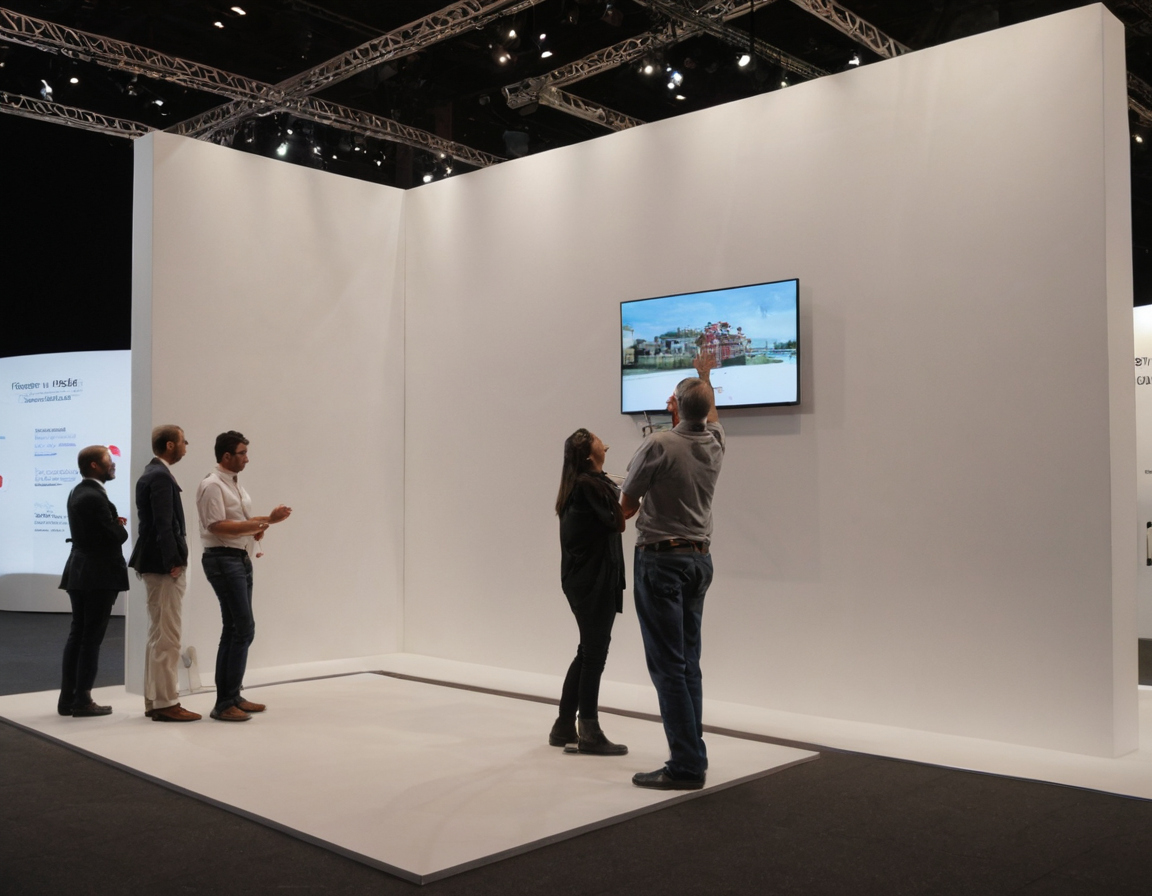
A two-drawing technical request lets the project manager choose the safer LED wall this week shown with practical context cues.
“Break down equipment, structures, labour, venue charges, power, plant, engineering, transport, show support, overtime, dismantling and VAT. Mark every item included, excluded or by others. State quotation validity, cancellation terms and the cost consequences of design or programme changes.
“Provide document deadlines, approval owners, delivery and removal slots, installation duration, commissioning time and inspection deadline.”
The safer LED wall is the option with the strongest approved fallback
| Control | Ground support | Rigging |
|---|---|---|
| Approval status and dependencies | Confirmed or open | Confirmed or open |
| Usable floor area and sightline benefit | Measured impact | Measured benefit |
| Verified total cost and contingency | Complete total | Complete total |
Set a fallback date after which suspension changes to ground support, provided the revised structure remains technically feasible. Require confirmation that frames, ballast and related hardware can be reserved, together with the cost and programme effect of activating that fallback. Name one person authorised to decide.
Choose the option that can be approved, installed and inspected within the confirmed programme while serving the stand’s commercial purpose, not automatically the visually cleaner option.
Late-change desk: exhibition LED wall questions
Does a ground-supported LED wall at a Dubai exhibition still require structural approval?
Potentially, yes. The stand builder and AV supplier should declare the complete frame, cabinet and ballast loads, stability method, base dimensions, rear access and any proposed floor fixing. The organizer or venue determines the required review under the current event rules.
How early must a rigged LED wall be submitted for venue and organizer approval in Dubai?
Use the deadline in the current organizer manual and hall documentation for the named event. Do not rely on a previous edition. Work backwards from that deadline to allow time for the coordinated drawing, load data, engineering review and corrections.
Which charges should be included in a like-for-like LED wall rental quotation?
Include LED equipment, processing, playback, support structure, ballast or rigging, engineering, venue services, power, plant, transport, installation, technicians, show support, overtime, dismantling and VAT. The quotation should mark exclusions and items supplied by others.